RealSimple Crypto Exchange: What to Verify Before You Sign Up
Researching RealSimple crypto exchange? We look at its AI and real-world-asset claims, why press releases aren't reviews, and the checks to run before depositing.
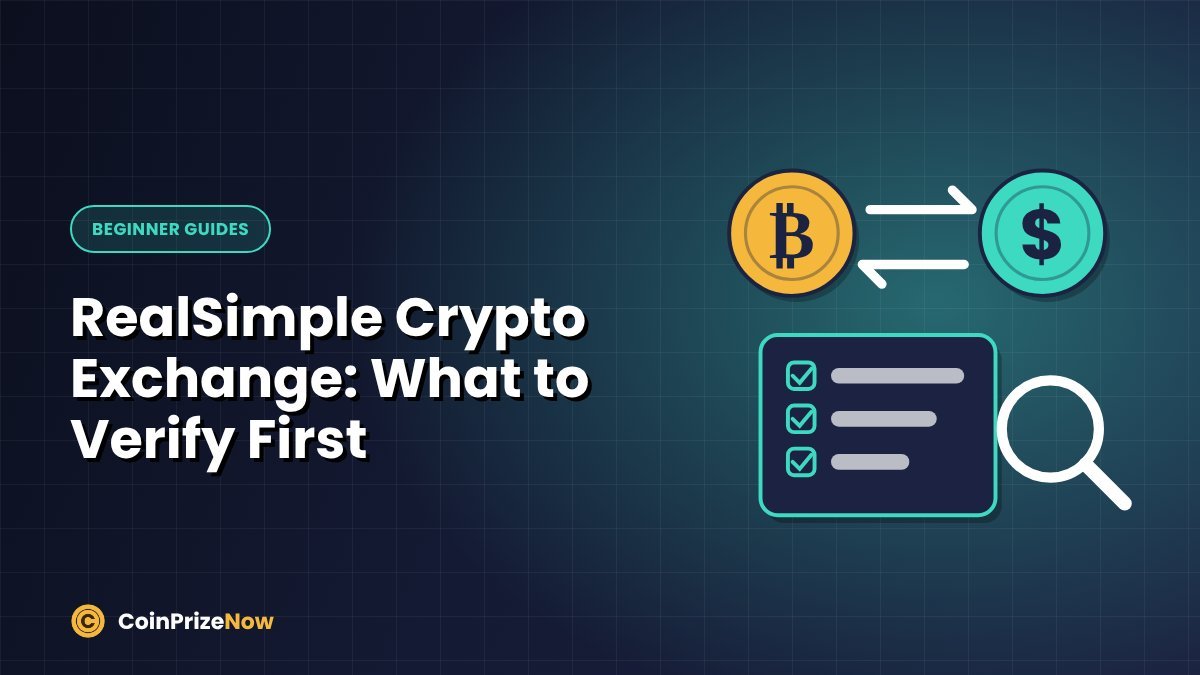
RealSimple crypto exchange has been promoted in a series of online articles describing it as a platform driving "AI-powered investments" and "real-world asset (RWA) tokenization". If you are considering signing up, this guide explains what the promotional material says, what we could and couldn't verify, and a practical checklist you can use to evaluate RealSimple — or any exchange — before you deposit money.
Note: We have not opened an account with RealSimple. In our research, the coverage we found consisted mainly of syndicated press releases rather than independent reviews. Nothing here is a claim that the platform is fraudulent; it is guidance on what to verify.
What the promotional articles claim
The articles we found, published on business-news sites through press-release distribution, describe RealSimple as:
- A crypto exchange using artificial intelligence to support investment strategies.
- A platform focused on real-world asset tokenization — turning assets such as property or commodities into blockchain tokens.
- Connected to a token described as "Sentient Dynamics".
These are popular buzzwords. They aren't red flags on their own, but they are frequently used in marketing for unproven or fraudulent platforms, because they sound advanced and are hard for newcomers to evaluate.
Why press releases are not proof
A press release appearing on a news website doesn't mean journalists investigated it. Companies pay distribution services to publish releases across many sites, often with a small "press release" label. Our guide to reading crypto news without being misled explains how to tell paid content from independent reporting.
Checklist: how to verify any crypto exchange
| Check | What to look for |
|---|---|
| Legal entity | A named company, registration number and physical address you can confirm in a public registry. |
| U.S. registration | For U.S. users: FinCEN money services business registration and state money transmitter licences (searchable via NMLS Consumer Access). |
| Regulator warnings | Search the name on state regulator and CFTC/SEC warning lists and international regulators' alert lists. |
| Track record | How long the exchange has operated; domain registration age. |
| Proof of reserves | Published, verifiable reserve data or audits by recognised firms. |
| Independent reviews | Forum and review-site feedback, especially about withdrawals. |
| Real trading activity | Is the exchange tracked by major data aggregators with consistent volumes? |
| Contact & support | Working support channels, named leadership, clear terms of service. |
Red flags to watch for
- Guaranteed returns from "AI trading bots" or fixed daily profits.
- Introduced by a stranger online, a new "friend", or a mentor in a messaging group.
- Withdrawal problems: demands for taxes, verification deposits or "unlock" fees before you can withdraw.
- Pressure to deposit more to reach a VIP level or unlock better returns.
- Platform's own token heavily promoted as the main investment.
Warning: Fake exchange websites can display impressive balances that don't exist. The real test of an exchange is whether you can withdraw — and you should learn the answer from independent sources before depositing, not after.
Understanding RWA tokenization in plain English
Real-world asset tokenization means representing ownership of an off-chain asset — like a bond, a share of real estate or gold — with a blockchain token. Legitimate RWA products exist, usually issued by regulated firms with clear legal structures. Ask: who holds the actual asset, what legal right does the token give you, and who audits it? If those questions don't have clear answers, the "asset backing" may exist only on paper.
Safer alternatives for beginners
If you're just getting started, choose a long-established exchange that is licensed in your state and has a public track record. Our guide on how to buy your first crypto safely walks through the process, and hot vs cold wallets explains how to hold crypto yourself rather than leaving it on any exchange.
Frequently asked questions
Is RealSimple crypto exchange legit?
We couldn't find independent evidence such as regulatory registrations or substantial independent reviews to confirm it. Use the checklist above, and don't deposit until you can verify the platform yourself.
Is an AI-powered exchange better?
Not necessarily. "AI" is often a marketing label. No AI can guarantee profits, and promises that it can are a warning sign.
Where can I report a suspicious exchange?
In the U.S., you can report to the FBI's IC3, the FTC, the CFTC and your state financial regulator.
Key takeaway
RealSimple crypto exchange is promoted with AI and real-world-asset buzzwords, mostly through press releases. Before signing up with RealSimple or any exchange, confirm its legal registration, look for regulator warnings, read independent withdrawal reviews and never trust guaranteed returns.
Educational content only. This article is for general information and is not financial, investment, tax or legal advice. Crypto assets are highly volatile and you can lose money. Always do your own research and never share your seed phrase or private keys. Read our full disclaimer.