Coin Can: From Spare-Change Jars to Crypto Round-Ups — What You Should Know
What "coin can" means: saving spare change in a coin can, turning it into cash, crypto round-up apps that invest spare change, and the CAN token ticker.
"Coin can" means different things to different people. For some it is the tin or jar where spare change piles up. For others it is about what a coin can do, or about apps that "round up" purchases and invest the spare change — sometimes in crypto. This guide covers all of these angles so you can make the most of your spare change, digital or physical.
The classic coin can: saving spare change
A coin can is simply a container — a tin, jar or sealed bank — where you drop loose coins. It works because it is effortless: you never feel the loss of a few quarters, but over months the total grows. Sealed cans that must be opened with a can opener add helpful friction, because you can't dip into them casually.
Tip: Give your coin can a specific goal — a holiday, a gift fund, or an emergency cushion. A named goal makes it more likely you'll keep feeding it.
Turning a full coin can into usable money
| Option | Pros | Cons |
|---|---|---|
| Your own bank or credit union | Often free for account holders | Some require rolled coins; policies vary |
| Self-service coin-counting kiosks | Fast and convenient | Cash payouts usually carry a fee; fee-free options often pay in gift cards |
| Rolling coins yourself | Free, accepted by most banks | Takes time |
| Spending directly | No fees | Slow and inconvenient for large amounts |
Before you pay a counting fee, ask your bank — many accept loose or rolled coins from customers at no charge.
The digital coin can: round-up apps
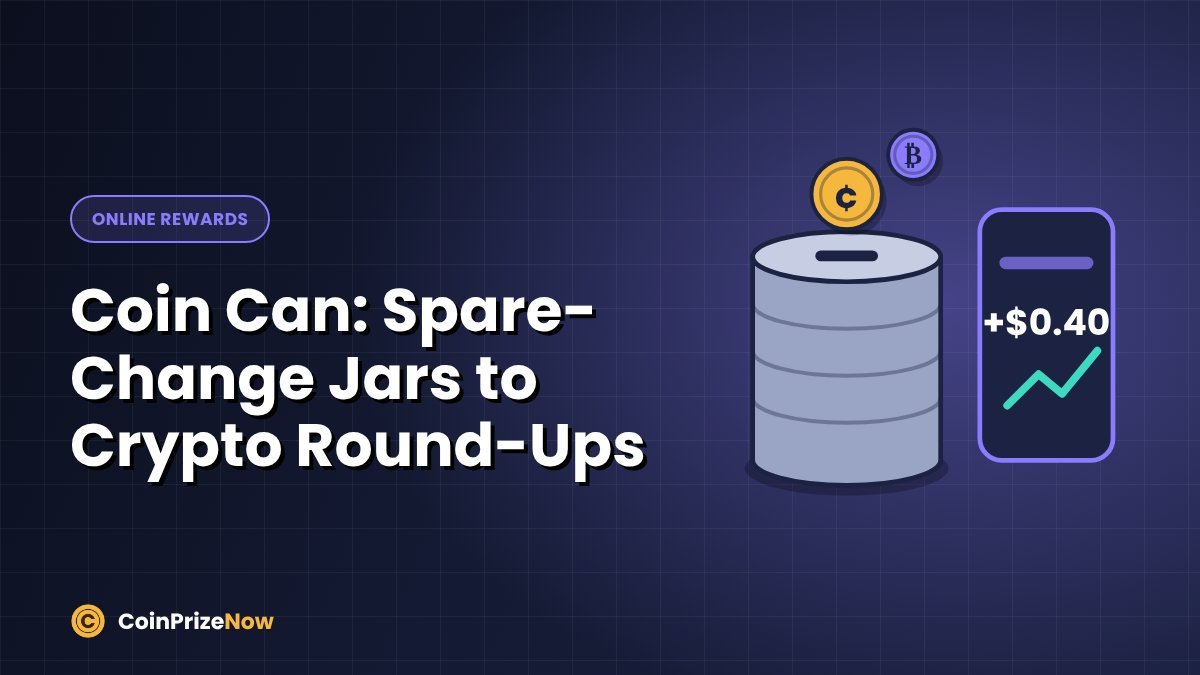
Round-up apps act like a virtual coin can. When you spend $4.60 on a card linked to the app, it rounds up to $5.00 and sets aside the $0.40. Those small amounts are then saved or invested. Some apps invest in funds; some crypto apps and exchanges invest round-ups into bitcoin or other cryptocurrencies.
Things to check before using a crypto round-up feature
- Fees: A flat monthly fee can eat a big share of small balances. A $1–$3 monthly fee on $20 of round-ups is a very high percentage.
- Spreads: Many apps build a markup into the crypto price. Small, frequent purchases can suffer more from this.
- Custody: Is the crypto held for you, or can you withdraw it to your own wallet? See hot vs cold wallets.
- Volatility: Unlike a coin can, crypto round-ups can lose value. Don't use this for money you'll need soon.
- Regulation: Use well-known, regulated providers available in your state.
Earning crypto "spare change" through rewards
Another way to fill a digital coin can without spending extra is through rewards: crypto cashback cards and shopping portals, learn-and-earn quizzes, and small reward tasks. Our guides on crypto cashback programs and learn-and-earn programs explain how these work — and how to judge whether they're worth your time using our reward-site value calculator method.
What a crypto coin can (and can't) do
Some people searching "coin can" want to know what a cryptocurrency coin can actually be used for. In general, a coin can:
- Be sent to anyone with a compatible wallet address, worldwide.
- Pay network fees on its own blockchain (for example, ETH pays gas on Ethereum).
- Be held as a speculative asset or used in staking on proof-of-stake networks.
It usually can't be reversed once sent, recovered without your seed phrase, or guaranteed to keep its value. If you're new, start with our beginner's guide to cryptocurrency.
A note on the CAN ticker
You may also see "CAN" as a crypto ticker — for example, CanYaCoin has used the CAN symbol, and conversion tools list it. As with any token, a shared or similar ticker can cause confusion, so verify the exact project and contract before buying anything with that symbol.
Frequently asked questions
Is a coin can a good way to save money?
For small, painless savings, yes. It won't earn interest, so for larger sums consider moving the money to a savings account once the can is full.
Are crypto round-up apps worth it?
They can be a gentle way to start, but compare fees carefully. On very small balances, fixed fees can outweigh any gains.
Can I deposit coins directly into a crypto account?
Not usually. You would deposit the coins at your bank first, then fund your crypto account by bank transfer.
Key takeaway
Whether it's a physical tin of quarters or an app rounding up your purchases, a coin can turns small, forgettable amounts into meaningful savings. Keep fees low, understand the risks if you add crypto to the mix, and give every coin can a clear goal.
Educational content only. This article is for general information and is not financial, investment, tax or legal advice. Crypto assets are highly volatile and you can lose money. Always do your own research and never share your seed phrase or private keys. Read our full disclaimer.